
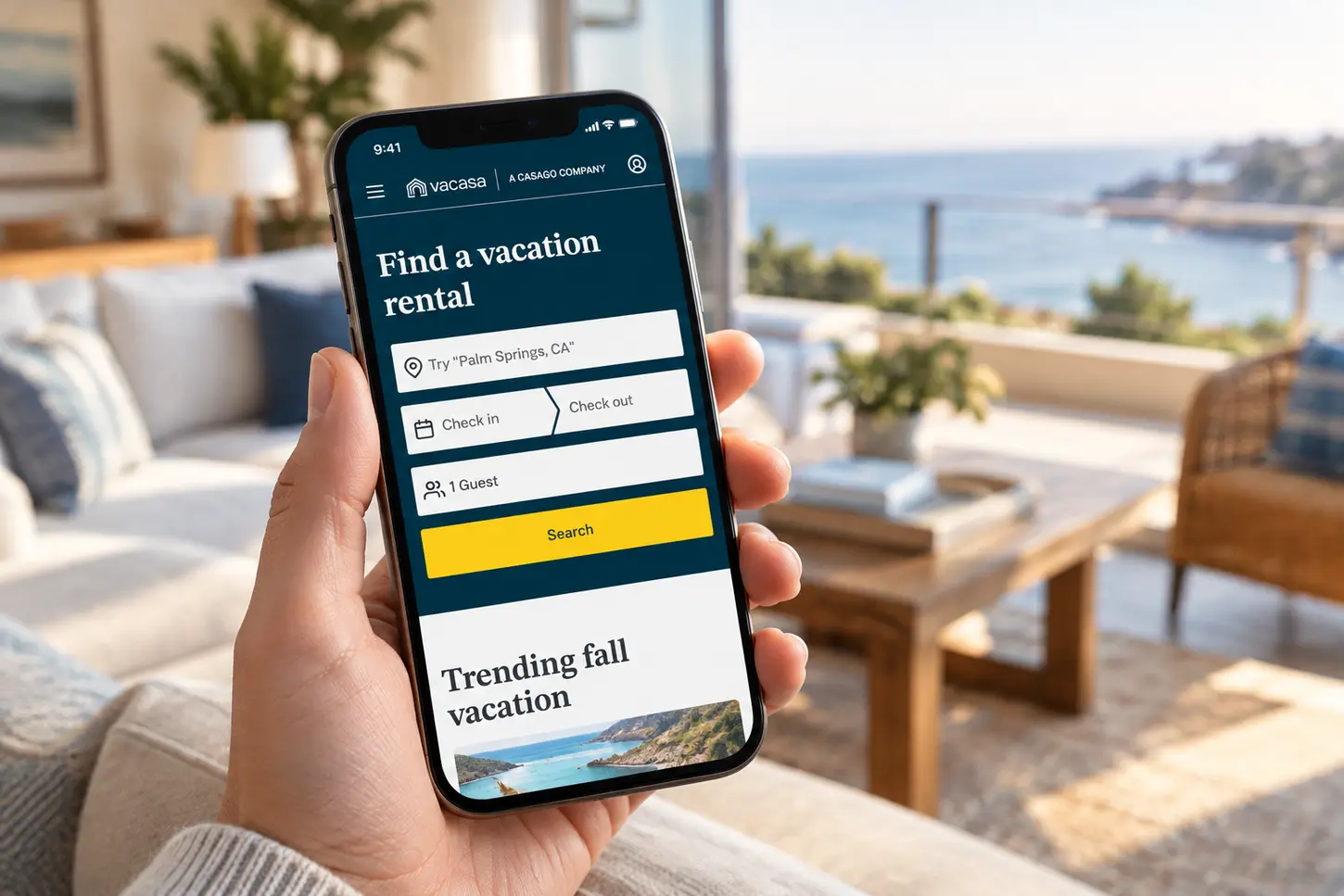
If you’ve been searching for Vacasa alternatives, you’re likely reacting to something specific: Vacasa’s former centralized national property management structure has fundamentally changed. Following Casago’s acquisition of Vacasa in May 2025, the brand’s former markets were sold to local franchise owners and regional operators, with the final transitions completed in September 2026. For many property owners, the management company handling their rental today may look and operate very differently from the Vacasa they originally signed with.
The best Vacasa alternatives for owners depend on each owner’s current situation. Some owners need to evaluate the local operator now handling their property. Others may be ready to switch to a different full-service management company that better fits their goals. And some owners may find that the transition is the push they need to explore property management software and run the rental business themselves.
This article covers three things:
- What actually happened to Vacasa, and what remains of the brand today
- What former Vacasa owners should do now to assess their management situation
- A practical comparison of property management companies, software platforms, and self-management options for 2026
What Happened to Vacasa in 2026?
Before comparing alternatives, it’s worth understanding exactly what changed and why so many owners are reconsidering their options this year.
Casago Acquired Vacasa in May 2025
Casago completed its acquisition of Vacasa on May 1, 2025. Following the transaction, Vacasa’s common stock ceased trading on Nasdaq. The deal brought together two vacation rental management businesses with very different operating philosophies.
Vacasa had operated as a centralized national property management company, with one brand, one organizational structure, and a consistent approach to guest services, pricing, and owner communication. Casago, by contrast, built its business on a franchise model: locally owned and operated markets supported by a shared technology platform and brand network.
The acquisition didn’t simply swap one national operator for another. It introduced a fundamentally different structure to the markets Vacasa had previously served.
Casago Transitioned Vacasa’s Former Markets to Local Operators in 2026
Casago sold Vacasa’s former markets to new local owners over the following year. On August 20, 2026, Casago’s announcement about the transition of former Vacasa markets confirmed that all former Vacasa markets had been sold. The final market transitions were completed in September 2026, according to Casago’s confirmation that the former Vacasa market transitions were completed, published on October 2.
The model that replaced Vacasa’s national operation relies on local franchise owners, destination-based businesses, and regional operators, each running its own management company within the Casago network. These local operators have access to Casago’s resources and technology, but day-to-day decisions, staffing, service quality, and owner relationships are handled at the local level.
For property owners, these Vacasa property management changes matter for practical reasons. Even if a familiar team is still showing up at the property, the legal entity responsible for the management agreement, the fee schedule, and the business relationship may have changed.
Is Vacasa Still in Business?
Yes, but not in the form most owners would recognize.
The Vacasa brand and website remain active. Vacasa.com continues to function as a vacation rental marketplace, facilitating bookings for properties managed by Vacasa-affiliated entities and, under Vacasa’s current Terms of Service, for properties managed by other hosts and operators as well. The terms draw a distinction between Vacasa-managed properties and those managed by third parties, which reflects how broadly the platform now operates.
What no longer exists is Vacasa’s previous structure: a single national company with centralized operations managing properties across the country under one management model. That structure has been replaced by a network of local operators.
If you still have a management arrangement through a former Vacasa market, it’s worth confirming exactly who is managing your property today. Knowing what happened to Vacasa and how it works under the old model makes it easier to spot what has changed in your own arrangement.
What Does the Vacasa Transition Mean for Property Owners?
The practical implications vary depending on the specific market and the local operator now responsible. But there are several things every affected owner should verify:
- The legal entity managing your property may have changed. The company named in your original management agreement may no longer be the entity responsible for day-to-day operations.
- Your primary contact and local team may have changed. Even a familiar face may now work for a different business.
- Management agreements, fee schedules, and service arrangements should be reviewed. A change in operating entity doesn’t automatically mean a change in fees or services, but it’s worth confirming.
- Listings, upcoming reservations, reviews, guest records, and payments should be verified. Confirm that nothing has been disrupted during the transition.
- Service quality depends heavily on the specific local operator. The Casago network provides support and infrastructure, but the individual franchise’s capabilities, staffing, and responsiveness vary.
A transition doesn’t automatically mean you need to terminate your agreement or that your terms have changed. But it does mean you should know exactly what those terms are and who is responsible for holding them.
Is Casago the Same as Vacasa?
No. The two are connected, but they are not the same thing.
Casago acquired Vacasa and now operates through a franchise-based model rather than Vacasa’s former centralized structure. A property that was once managed by Vacasa directly may now be handled by a Casago franchisee, a regional operator, or another local business that joined the network through the market sale process.
Casago is not simply an unrelated competitor or a like-for-like replacement. It’s the new parent company operating through a different organizational model. What this means in practice depends on the specific operator in your market. That is why owners should evaluate the actual business managing their property rather than relying on brand recognition alone. Understanding what a vacation rental property manager does can help you ask the right questions when evaluating whoever is now handling your rental.
What Should Former Vacasa Property Owners Do Now?
If your property was previously managed by Vacasa, the steps below will help you understand your current situation before making any decisions about switching providers or self-managing.
1. Confirm Who Manages Your Property Today
Start by contacting the person or company currently handling day-to-day operations. Ask for:
- The legal name of the management company now responsible for your property
- Written confirmation of any transfer or assignment of the management agreement
- The identity of the specific business responsible for guest inquiries, emergencies, cleaning, and maintenance
- Confirmation of who prepares and delivers owner reporting and financial statements
A familiar local team may still be in place, but the business they work for may have changed. Verify rather than assume.
2. Review Your Management Agreement
Pull out your original management agreement and read it with the transition in mind. Key things to check:
- Assignment provisions: Did the agreement allow Vacasa to transfer it to another operator without your consent?
- Contract length and renewal terms: When does the current term end, and does it renew automatically?
- Termination clauses and notice periods: What are the requirements and any applicable fees for ending the agreement?
- Fee schedule and service scope: Have either changed as a result of the transition?
If the transition raises questions about your contractual rights, consult a qualified attorney before making any decisions.
3. Verify Your Listings and Upcoming Reservations
Confirm that your property’s listings remain active and accurate on the relevant booking channels. Then check:
- Upcoming reservation dates and guest communications
- Payment arrangements and who handles deposits and payouts
- Who manages cancellations, refunds, and guest complaints
- Whether listing access, photographs, reviews, and booking history remain available to you as the owner
Gaps in any of these areas can affect both your income and your guests’ experience.
4. Review Your Property’s Financial Performance
Compare recent owner statements against the same season in prior years. Key metrics to examine:
- Occupancy rate and average daily rate
- Gross booking revenue versus net owner income
- Management commissions, cleaning costs, maintenance charges, and other fees
- Any new line items that weren’t present under the previous arrangement
Before drawing conclusions, account for seasonal differences and local market conditions. Not every change in performance is attributable to the management transition.
5. Decide Whether to Stay, Switch, or Self-Manage
Once you have a clear picture of who is managing your property and how well they’re performing, you have three realistic paths forward:
- Stay with the current operator: Appropriate when the service is satisfactory, the contract terms are reasonable, and financial results meet your goals
- Switch to another management company: Appropriate when you want a different service model, stronger local accountability, or better performance
- Self-manage with software: Appropriate when you want greater control and are prepared to oversee operations directly
The rest of this article covers what to look for and how to compare your options.
What to Look for in a Vacasa Alternative
Not all alternatives to Vacasa property management are the same type of solution. Before comparing specific providers, it helps to understand the different categories available and what each one can and cannot do.
Full-Service Vacation Rental Management Companies
Full-service property managers typically coordinate reservations, listing distribution, guest support, cleaning, and maintenance. Many also offer revenue management, professional photography, and local operational infrastructure.
This model suits owners who want a genuinely hands-off arrangement. But “full-service” varies significantly by company and market. Before committing, review management commissions, additional fees, service scope, local staffing, and contract terms carefully.
Partial-Service Vacation Rental Management
Partial-service providers typically handle marketing, listing distribution, and booking support while leaving some responsibilities, such as cleaning coordination or maintenance, to the owner or separately contracted vendors.
This can work well for owners who have reliable local support but need help with reservations, pricing, and OTA channel management.
Vacation Rental Property Management Software
Vacation rental management software helps owners manage calendars, bookings, guest messaging, pricing, and operational workflows. Many platforms support multi-channel listing distribution and direct reservations.
Software doesn’t clean the property, respond to a guest emergency, or coordinate a repair. It gives you the tools to manage those things yourself. It’s best suited to owners who want operational control and already have local support systems in place or are building them.
Independent Local Property Managers
Local property managers often bring genuine market-specific knowledge and direct relationships with local vendors. But the quality, staffing, technology, and reporting practices vary considerably from one business to the next.
Evaluating an independent local manager requires more due diligence than signing with a national brand, but it can also result in a more accountable, more responsive management relationship. References, contracts, financial reporting practices, and emergency coverage should all be reviewed before committing.
Best Vacasa Alternatives for Vacation Rental Owners in 2026
The options below include full-service Vacasa competitors, franchise networks, and software platforms, and each serves a different type of owner. No single provider is the right fit for every property or every situation. The goal here is to give you enough information to identify which category, and which specific option, aligns with what you’re looking for.
1. Independent Local Vacation Rental Management Companies — Best for Local Accountability
For many former Vacasa owners, the most practical next step isn’t switching to another national brand. It may be evaluating the local company already managing the property, or comparing that company against other local operators in the same market.
Local management companies typically offer:
- Genuine market knowledge and established relationships with local cleaning and maintenance vendors
- Direct access to the business owner or a named local manager, rather than a national call center
- On-the-ground availability for guest emergencies and property issues
- Revenue management and listing distribution tailored to local demand patterns
The trade-off is that quality varies. A strong independent operator can outperform a national company on almost every measure. A weak one can underperform on all of them. Before committing to any local company, ask for:
- References from comparable properties in the same area
- Sample owner statements to evaluate reporting detail
- A clear explanation of fee structure, including management commission, cleaning coordination fees, and maintenance markups
- Confirmation of after-hours emergency coverage and staffing arrangements
For owners currently working with a local franchise that took over a former Vacasa market, this is also an opportunity to compare that operator against competing local companies before renewing any agreement.
2. Evolve — Best for Owners Who Want Booking Support Without Full-Service Management
Evolve’s vacation rental management services represent a different model: marketing and booking support rather than full operational management. Evolve’s team manages the calendar, adjusts nightly rates, and promotes the property across major booking sites, with advertised management fees starting at 10%.
Evolve’s core service is not an on-site operation. Owners should expect to arrange local cleaning, maintenance, and on-site support themselves or through separately contracted vendors, and should confirm exactly which responsibilities remain theirs before signing.
This model works well for owners who:
- Already have a reliable local cleaning team and maintenance contacts
- Want professional listing management and revenue optimization without paying full-service management rates
- Prefer to remain more closely involved in their property’s operations
Before comparing Evolve’s fee against a full-service manager’s commission, calculate total operating costs for equivalent service levels. A lower management fee combined with directly hired local services may or may not produce a lower total cost. It depends on the market, the property, and the owner’s time.
Key considerations: Verify current property eligibility requirements, fee structure, and the scope of guest support directly with Evolve before making any decisions.
3. Awning — Best for Owners Evaluating Professional Management Services
Awning is a full-service vacation rental management company covering listing marketing, dynamic pricing, guest communication, and cleaning and maintenance coordination. RedAwning, a vacation rental marketing and distribution platform, acquired Awning in April 2024, so the two should be treated as one business rather than separate alternatives.
Awning operates as a single national company with remote management rather than a network of independently owned local operators. Some owners will see that as a strength. For owners leaving Vacasa’s former centralized model, though, it’s worth asking how Awning handles on-site issues in your specific market.
Things to verify before engaging:
- Whether your property and market are eligible
- Current fees and contract terms. Awning advertises management fees starting at 10% of monthly revenue, depending on property type, location, and services
- How listings, reviews, and booking history are handled if you join or later leave, given the shared RedAwning platform
- Owner reporting practices and the level of control you retain over pricing and property decisions
Key consideration: Confirm who handles cleaning, maintenance, and emergencies locally before committing.
4. iTrip Vacations — Best for Owners Seeking a Local Franchise Operator
iTrip Vacations operates on a franchise model similar in structure to Casago. Local owners run their own markets under the iTrip brand, supported by shared technology and resources. If the Casago franchise model wasn’t the right fit for your property, iTrip offers a comparable local-franchise approach with its own network of market operators.
Services available through iTrip typically include:
- Listing distribution on major booking platforms
- Revenue management and dynamic pricing
- Guest communication and customer support
- Local cleaning and maintenance coordination through the franchisee’s network
The local franchisee’s capabilities are the most important factor to evaluate. iTrip’s national brand infrastructure is useful, but the quality of service, staffing, and emergency coverage depends on the individual franchise operator in your market.
Key consideration: Research the specific iTrip franchisee in your area and ask the same questions you’d ask of any local operator about references, reporting, staffing, and contract terms. Contact the local operator for pricing, since fees and service terms can vary by market.
5. AvantStay — Best for Eligible Premium and Group-Oriented Properties
AvantStay focuses on upscale vacation rentals, with an emphasis on properties suited to large-group stays. The company handles property presentation, hospitality services, revenue management, and multi-channel distribution for homes that meet its property and market criteria.
For eligible properties, AvantStay offers:
- Professional design and photography standards
- Group-booking experience and event-appropriate property management
- Dedicated hospitality services and guest support
The trade-off is that AvantStay is selective. Standard properties and markets outside the company’s core footprint may not qualify. AvantStay does not publish a standard rate. It charges a single management fee, quoted per home, that covers services such as photography, marketing, dynamic pricing, guest support, and cleaning and maintenance coordination. Contact AvantStay for pricing, and review contract commitments carefully.
Key consideration: Contact AvantStay to confirm property eligibility, market availability, and current terms. This option is not a fit for every owner or every property type.
6. Guesty — Best for Professional Operators Who Want a Central Management System
Guesty is property management software, not a full-service management company. It’s designed for property managers and professional operators: businesses that manage multiple rentals and need a centralized system to coordinate bookings, guest messaging, channel distribution, and operational workflows.
Core capabilities include:
- Multi-channel reservation management from a single dashboard
- Automated guest communication and messaging workflows
- Direct booking capabilities and website integration
- Reporting, owner statements, and financial tracking
- Integrations with major OTAs, payment processors, and hospitality tools
Guesty does not provide cleaning staff, maintenance support, or physical property management. It provides the operational infrastructure for running a rental business, but the operational team still has to exist.
Key consideration: Guesty is best suited to property managers with existing operational teams or owners with multiple properties who are building toward a professional management operation. Contact Guesty or check its website for current plan pricing and onboarding requirements before committing.
7. Hostaway — Best for Growing Multi-Property Businesses
Hostaway is vacation rental software designed for property managers and owners running growing portfolios. It centralizes booking management, calendar synchronization, and channel distribution while providing automation tools that reduce repetitive operational tasks.
Key capabilities include:
- Centralized calendar and reservation management across multiple channels
- Automated guest messaging and task workflows
- Integrations with OTAs, dynamic pricing tools, payment processors, and other hospitality platforms
- Owner reporting and direct-booking website support
Hostaway suits operators who are scaling and need a system that can grow with them, covering multiple properties, multiple channels, and consolidated reporting in one place.
Key consideration: Contact Hostaway for current pricing, and evaluate total costs, including subscription fees, integration costs, and the time required for onboarding and setup. Match the feature set to what your operation actually needs before committing.
8. Hospitable — Best for Independent Hosts Seeking Automation
Hospitable is designed for individual hosts and small portfolio owners who self-manage their properties and want to reduce the time spent on repetitive administrative tasks. It automates much of the guest communication layer that most hosts find most time-consuming.
Core features include:
- Automated guest messaging based on booking triggers and customizable templates
- Calendar synchronization and booking management
- Cleaning and task scheduling workflows
- Direct-booking tools and channel connections
- Integration with Airbnb, Vrbo, and Booking.com
Hospitable is designed to be approachable for hosts with small portfolios. Automation reduces repetitive work, but it doesn’t eliminate the owner’s responsibilities for cleaning quality, property maintenance, local responsiveness, or guest satisfaction.
Key consideration: Check Hospitable’s current plan pricing and feature availability directly, since costs depend on the plan and portfolio size.
9. Self-Management With Your Own Website and Technology Stack — Best for Maximum Control
Self-managing vacation rentals with a purpose-built technology stack gives owners the most control over their rental business, along with the most responsibility. Done well, it can reduce management costs. Done poorly, it creates more work than most owners anticipate.
A functioning self-management approach typically involves:
- A direct-booking website: Your own branded property site where guests can book without paying OTA fees. This also gives you direct access to guest data and relationships.
- Channel management software: Distributes listings across Airbnb, Vrbo, Booking.com, and other platforms while keeping calendars synced and preventing double bookings
- Automated guest communication: Tools like Hospitable or similar platforms to handle pre-arrival, check-in, and check-out messaging
- Local service providers: Your own contracted cleaners, maintenance contacts, and emergency support
- A digital guidebook or in-property concierge: Gives guests the property information they need without creating a constant stream of repetitive calls and messages
Understanding the differences between direct bookings and Airbnb is essential before building this kind of operation, since your distribution strategy affects your revenue, your costs, and your relationship with guests.
The trade-offs are real: self-management takes time, requires building and maintaining operational systems, and puts the owner directly responsible for everything that goes wrong. But for owners who want maximum control over their brand, their guest relationships, and their costs, it’s the most flexible option available.
Vacasa Alternatives Compared: Which Option Is Right for You?
| Alternative | Service Model | Best Fit | Key Consideration |
|---|---|---|---|
| Independent local manager | Full-service or partial-service | Owners seeking local accountability | Quality and services vary by operator |
| Evolve | Partial-service management | Owners retaining local responsibilities | Confirm what the owner must handle |
| Awning | Full-service management (owned by RedAwning) | Owners seeking professional support | Confirm local support and current terms |
| iTrip Vacations | Franchise-based management | Owners seeking a local operator | Evaluate the individual franchise |
| AvantStay | Premium management | Eligible upscale properties | Property eligibility and market coverage |
| Guesty | Software | Professional operators | Requires an operational team |
| Hostaway | Software | Growing rental portfolios | Evaluate complexity and total cost |
| Hospitable | Software | Independent hosts | Requires owner oversight |
| Own website and software stack | Self-management | Owners seeking control | Requires time, systems, and local support |
Which Vacasa Alternative Is Best for a Hands-Off Owner?
For owners who want minimal involvement, full-service management remains the clearest path. The options most relevant here are independent local managers, Awning, iTrip Vacations, and AvantStay for qualifying properties.
The most important variables to verify for any full-service arrangement are:
- Local staffing: Who specifically responds to guest issues, not just the company’s national support line?
- After-hours emergency coverage: Who handles a burst pipe or a lockout at 11 PM?
- Cleaning and maintenance coordination: Is this managed in-house or outsourced, and how consistently?
- Owner reporting: How detailed are the statements, and how frequently are they produced?
A company with a strong national brand but weak local execution will not deliver a genuinely hands-off experience. Verify the local operation, not just the brand.
Which Vacasa Alternative Is Best for Owners Who Want Lower Costs?
This comparison is more complicated than it appears. A partial-service provider with a lower management fee still requires the owner to arrange and pay for cleaning, maintenance coordination, and local support separately. Software platforms charge subscriptions but put all operational responsibility on the owner or their own team.
To make a meaningful cost comparison:
- Calculate the total fee burden under your current or previous arrangement (management commission + cleaning fees + maintenance markups + other charges)
- Model the equivalent cost for each alternative at the same service level, not just the headline management percentage
- Factor in the value of your own time if you’re moving toward self-management
Software platforms and partial-service models often cost less in management fees alone. Whether they cost less in total depends on the property, the market, and how much operational work the owner is prepared to take on.
Which Vacasa Alternative Is Best for Owners With Multiple Properties?
Owners managing more than one property need solutions that scale. The most important capabilities to evaluate are:
- Consolidated calendar and channel management: Can all properties be managed from a single dashboard?
- Unified owner reporting: Can performance across the portfolio be compared in one view?
- Operational automation: How much repetitive work can be reduced through automated messaging, task assignment, and scheduling?
- Integration ecosystem: Does the platform connect with the tools and services already in use?
Software platforms like Guesty and Hostaway are built specifically for this use case. For owners seeking managed services rather than software, a local management company with portfolio experience or a franchise operator handling multiple properties in the same market may be the better fit.
Which Alternative Gives Owners the Most Control?
Self-management with your own technology stack offers the most control across every dimension: listing ownership, pricing decisions, guest data, brand identity, and the ability to switch vendors without contractual friction.
After self-management, partial-service providers like Evolve typically offer more owner control than full-service managers, since the owner retains operational responsibility. Full-service management companies, by their nature, require ceding some decisions to the manager.
Key control factors to review in any management agreement:
- Who owns or controls the OTA listings and reviews?
- Can the owner access guest data, booking history, and contact records?
- What happens to the listing, reservations, and records if the contract ends?
- Can the owner independently market the property during or after the agreement?
These terms vary significantly between providers and can have a major impact on the owner’s ability to transition if the relationship doesn’t work out. Understanding the difference between an Airbnb co-host and a property manager is useful context here, since listing ownership and access rights work differently depending on the arrangement.
Is It Better to Hire a Local Manager or Use Software?
A local manager provides human operational support: someone who responds to guest emergencies, coordinates cleaning turnovers, arranges repairs, and builds relationships with local vendors. Software helps coordinate tasks, reservations, and communications, but it doesn’t provide the physical operational infrastructure.
The right choice depends on two things: how much of the operational work you’re prepared to handle yourself, and what local support is realistically available for the property.
For owners in markets with limited local management options, or properties that guests can largely access and operate independently, software-driven self-management is viable. For properties with complex operational needs, high guest turnover, or minimal owner availability, a local manager will generally be the more reliable choice.
What Should Vacation Rental Owners Compare Before Switching Managers?
The name and commission rate of a management company are the starting point, not the full picture. Before switching providers, compare the following.
Management Fees and Total Operating Costs
A complete cost comparison includes:
- Management commission: Typically a percentage of gross rental revenue, but the base it’s calculated on (gross vs. net, including or excluding OTA fees) varies
- Cleaning and turnover fees: Whether included in the commission or charged separately, and at what rate
- Maintenance markups: Some managers add a percentage to contractor invoices
- Software subscriptions: If moving to self-management, platform costs for channel management, messaging, and pricing tools
- Booking channel and payment processing fees: These vary by platform and payment method
- Onboarding or setup fees: Some providers charge these upfront
- Termination charges: Review before switching to understand any exit costs from the current arrangement
- Owner time: If moving toward self-management, the hours required to run the property have a real value even if they don’t appear on a statement
Local Staffing and Emergency Support
Questions to ask any management company before committing:
- Who responds to guest issues after business hours: a local staff member or a national call center?
- Is on-site assistance available when guests need it?
- Who coordinates cleaning schedules and confirms turnovers are complete?
- What happens when the primary contact is unavailable?
- How are urgent repairs handled, and what’s the typical response time?
Listing Ownership, Reviews, and Guest Data
These questions become particularly important when evaluating a transition, since losing access to reviews, booking history, or listing content can set back a property’s performance significantly.
- Who owns or controls the OTA account and listings?
- Can the owner access listing content, photographs, and performance analytics?
- What guest data, such as contact records, booking history, and communication logs, is available to the owner?
- What happens to reservations and records if the contract ends?
- Can the owner independently continue marketing the property?
Access and transfer rights depend on the specific agreements, platform policies, and applicable privacy requirements. Get written answers to these questions before signing.
Revenue Management and Reporting
Strong revenue management and transparent reporting are among the clearest differentiators between management companies. Evaluate:
- How rates are set and adjusted: manual pricing, dynamic pricing algorithms, or a combination?
- What market data and competitive benchmarks inform pricing decisions?
- How detailed are owner statements? Do they show gross revenue, OTA fees, management commissions, and individual expense line items clearly?
- Can the owner access occupancy, average daily rate, and net revenue in a dedicated owner portal?
- Are revenue management services included in the commission, or charged separately?
Contract Flexibility and Exit Terms
Before signing any management agreement, review:
- Contract length and automatic renewal clauses
- Notice period required to terminate without penalty
- Early termination fees and the circumstances in which they apply
- Assignment clauses: can the management company transfer the contract to another operator without the owner’s consent?
- What happens to outstanding reservations, payments, and guest communications after the contract ends?
- Whether the owner can access listing data, photographs, and reviews post-termination
Given what many former Vacasa owners have recently experienced with an assignment they didn’t anticipate, these terms deserve particularly close attention.
How to Switch From Vacasa or Its Successor Operator
Switching property managers requires coordination across multiple moving parts. Working through the steps below in order will help avoid gaps in coverage, booking conflicts, or disruption to guests.
Step 1: Identify the Current Management Company
Before doing anything else, obtain written confirmation of the legal entity currently responsible for your property and its day-to-day operations. This is the entity you’ll be negotiating the transition with.
Step 2: Review Your Contract and Financial Statements
Review the management agreement for assignment provisions, fee schedules, renewal dates, termination terms, and notice requirements. Cross-reference recent owner statements against previous periods to understand current performance and identify any outstanding financial obligations.
Step 3: Confirm the Status of Existing Reservations
Establish who is responsible for upcoming bookings, guest communications, pending payments, and any reservation modifications or cancellations. Ensure that a transition doesn’t leave guests with unresolved or uncommunicated changes to their booking.
Step 4: Compare Written Proposals From Alternative Providers
Request comparable information from each provider you’re evaluating: fee structures, service scope, local staffing arrangements, owner reporting practices, and contract terms. Proposals that lack detail on any of these areas are worth following up on before making a decision.
Step 5: Plan the Handover Before Ending the Existing Agreement
Coordinate the transition around existing reservations, cleaning schedules, and maintenance obligations. Avoid creating booking gaps, double bookings, or periods where neither the outgoing nor incoming manager is clearly responsible. Request access to listing content, photographs, and booking records before the current agreement ends.
Step 6: Improve Your Guest Information and Operating Processes
A management transition is a natural point to review the guest experience from the ground up. Check-in instructions, Wi-Fi details, house rules, appliance guides, local recommendations, and checkout procedures should all be current and easy to find. A digital guidebook installed at the property can reduce repetitive questions from guests, provided the information is accurate and covers what guests actually need. Because it belongs to the property, it can also stay in place regardless of who is managing it.
How GuideScreen Helps Vacation Rental Owners Maintain a Better Guest Experience
Changing property managers affects many parts of your rental operation. One thing that shouldn’t change, and that you can control directly, is the quality of information guests have access to during their stay.
GuideScreen is a 21.5″ wall-mounted digital concierge installed at the property. It displays property instructions, local recommendations, and guest information on-screen from the moment guests arrive. It works alongside any management arrangement, whether full-service, partial-service, or self-managed, and gives guests a consistent, professional in-property experience regardless of which company or individual is overseeing the booking side.
Provide Essential Property Information in One Place
GuideScreen displays the information guests most frequently need: Wi-Fi access via a scannable QR code, house rules, check-in steps, appliance guides, checkout checklists, and how-to videos for unfamiliar equipment. When that information is visible on the wall the moment guests walk in, they’re less likely to reach out to you or your manager with the same routine questions.
Make Local Recommendations Available Inside the Property
Guests want to know where to eat, what to do, and where to find what they need locally. GuideScreen lets you curate that information, including your own recommendations for nearby restaurants, activities, and services, and display it alongside the property details. It’s the kind of local knowledge that makes a stay memorable, presented in a format guests can browse at their own pace.
Standardize Guest Information Across Multiple Rentals
For owners managing more than one property, GuideScreen’s Admin Console makes it possible to set up and manage each property’s content from a single dashboard, accessible from any browser. Consistent guest information across a portfolio means less improvisation and fewer avoidable issues, regardless of which manager or platform is handling the bookings.
Hear From Guests Directly During a Management Change
GuideScreen’s check-in feedback and checkout rating features prompt guests to share their impressions while they are still at the property. For an owner whose rental has recently moved to a new operator, that feedback adds a direct view of the guest experience alongside the owner statements and reviews the manager provides.
Reduce Repetitive Questions With Better In-Property Information
When the Wi-Fi password is on the screen, the checkout checklist is visible before guests leave, and the appliance instructions are easy to find, guests can handle most routine situations on their own. That can reduce the calls, messages, and emails sent during a stay. Results depend on the information provided: content that is accurate, current, and matched to the questions guests actually ask will do far more than a screen with gaps in it.
Can GuideScreen Replace a Vacation Rental Management Company?
No. GuideScreen is an in-property digital concierge. It doesn’t manage reservations, coordinate cleaning, respond to emergencies, or handle maintenance requests. A property still needs those things handled by either a management company or an owner-built operational system.
What GuideScreen does is improve the guest-facing side of any management arrangement. Whether you stay with your current operator, switch to a new management company, or move to self-management, the information guests need during their stay can be available on the wall, clearly presented, and consistently up to date.
If you’re evaluating ways to improve the vacation rental guest experience as part of a management transition, a digital concierge is one part of that picture worth exploring. You can learn more about what GuideScreen offers at guidescreen.com.
Frequently Asked Questions About Vacasa Alternatives
Is Vacasa Still in Business in 2026?
Yes, the Vacasa brand and website remain active. However, the former centralized national property management structure no longer exists. Former Vacasa markets have been transitioned to local operators and franchisees following Casago’s acquisition and the market sale process completed in 2026.
What Happened to Vacasa Property Management?
Casago completed its acquisition of Vacasa on May 1, 2025. Over the following year, Casago sold Vacasa’s former markets to local franchise owners, regional operators, and destination-based businesses. The final market transitions were completed in September 2026. Owners who were previously managed by Vacasa should confirm which company currently manages their property.
Who Owns Vacasa Now?
Casago acquired Vacasa in May 2025. Under the current Terms of Service, Vacasa LLC is identified as a Casago subsidiary. Corporate ownership of the Vacasa brand, however, is separate from the local ownership of former Vacasa markets. Those are now operated by individual franchise owners and regional operators within the Casago network, not by a single national entity.
Is Casago Replacing Vacasa?
Casago acquired Vacasa and transitioned its former markets to local operators through its franchise network. Casago did not simply step into Vacasa’s centralized management structure. It replaced that structure with a different model. Owners should verify the specific company responsible for their property rather than assuming either Vacasa or Casago is managing it directly.
What Is the Best Alternative to Vacasa for Property Owners?
There is no universal answer. The right alternative depends on the type of service you need (full-service management, partial-service, or software), local coverage in your market, budget, and how much involvement you want in operations. This article compares the main options across each of those dimensions to help you narrow it down.
Is Evolve Cheaper Than Vacasa?
Possibly, but a straight fee comparison doesn’t tell the full story. Evolve’s model includes listing management and booking support but not local operational services. The owner arranges and pays for cleaning, maintenance, and on-site support separately. Whether total costs are lower than a full-service manager’s all-in fees depends on the property, the market, and what the owner is paying for each service independently.
Can I Self-Manage My Vacation Rental Instead of Hiring a Company?
Yes. Self-management is a viable option for owners who are prepared to take on the operational responsibilities involved. Booking platforms, automated messaging tools, dynamic pricing software, and channel management systems have made it significantly more accessible than it was a few years ago. The work involved is real, but so is the level of control it provides.
What Happens to My Vacasa Management Contract?
The answer depends on the specific agreement, its assignment provisions, any transition documentation provided by the new operator, and applicable state law. Owners should obtain written confirmation of the current contracting entity and review termination terms before making any decisions. A qualified attorney can advise on contractual rights if there is uncertainty.
Can I Still Book a Vacation Rental Through Vacasa.com?
Yes. Vacasa.com remains active as a vacation rental marketplace. The current Terms of Service distinguish between properties managed by Vacasa-affiliated entities and properties managed by other hosts. Guests should review the management details associated with the specific property they’re considering, as the experience and services may vary depending on who is managing it.
How Can I Improve My Vacation Rental’s Guest Experience After Changing Managers?
Start with the basics: clear check-in instructions, accurate property information, dependable local support, and consistent guest communication. Guests consistently respond well to properties where they can find what they need without having to ask. There are many ways to improve the vacation rental guest experience that don’t depend on which company manages the bookings, and in-property information quality is one of the most directly controllable. A wall-mounted digital concierge like GuideScreen is one way to keep that information accessible and personalized from the moment guests walk in the door.
Your Guest Experience Doesn’t Have to Change When Your Manager Does
A management transition affects contracts, listings, financial reporting, and local relationships. The information guests rely on during their stay doesn’t need to be rebuilt every time one of those things changes.
Check-in steps, house rules, appliance guides, local recommendations, and checkout procedures are knowledge about the property, not about the management company. When owners keep that information organized and under their own control, it can stay consistent whether the property remains with its current operator, moves to a new management company, or becomes self-managed. It also gives a new manager a clear starting point, which helps the guests who arrive during a handover.
GuideScreen was built for this role. Owners manage the content from the Admin Console, and the screen stays at the property through changes in management, so guests continue to see a familiar welcome and the local recommendations their host trusts.