
The Evolution of Vacation Rental Guidebooks
Vacation rental guidebooks have long been a staple for hosts aiming to enhance their guests’ experience. Traditionally, these guidebooks took the form of printed materials—pamphlets, binders, or booklets—placed strategically within the rental property. They contained essential information such as house rules, emergency contacts, appliance instructions, and local recommendations. While effective in many ways, these physical guidebooks presented limitations: they could become outdated quickly, were prone to wear and tear, and lacked interactivity.
The rapid advancement of technology and the ubiquity of smartphones sparked a shift towards digital solutions. Digital guidebooks emerged as a more dynamic alternative, allowing hosts to update content instantly and offer richer multimedia experiences. Among these innovations, app-based digital guidebooks have gained notable popularity. These apps consolidate all necessary information into one easy-to-navigate platform accessible via guests’ mobile devices.
Why App-Based Guidebooks Are Popular
App-based guidebooks appeal to both property owners and guests for several reasons:
- Convenience: Guests carry their vacation information wherever they go without needing physical copies.
- Real-time updates: Hosts can promptly communicate changes such as new check-in procedures or local event alerts.
- Personalization: Interactive features enable tailored recommendations and direct communication between hosts and guests.
This trend reflects broader consumer behavior toward mobile-first access to information. As digital natives increasingly dominate the travel market, understanding the pros and cons of different digital guidebook solutions becomes essential for vacation rental hosts looking to optimize their guest experience.
Understanding App-Based Digital Guidebooks
App-based digital guidebooks are a modern version of traditional travel and activity guides. Instead of printed materials, these guides deliver curated information through smartphone or tablet applications. With these digital platforms, users can instantly access comprehensive content tailored to their specific interests.
Whether it’s vacation rental details provided by hospitality-focused solutions such as Touch Stay and Hostfully, or specialized travel apps, app-based digital guidebooks offer a convenient and personalized way to explore various activities and accommodations.
What Are App-Based Digital Guidebooks?
An app-based digital guidebook is a software application designed to provide location-specific, up-to-date information in an interactive format. Unlike static paper booklets, these apps leverage mobile technology capabilities to enhance user experience with dynamic content and functionalities that adapt to real-time conditions.
Examples of App-Based Digital Guidebooks
Touch Stay: Addresses the vacation rental market by offering hosts a way to digitally present all essential property information, local recommendations, house rules, and emergency contacts directly on guests’ devices. Touch Stay is typically accessed via a web link sent to guests, making it a Progressive Web App (PWA) that doesn’t require a traditional app download.
Hostfully: Another major player in the vacation rental space that provides similar features as Touch Stay but with its own unique selling points. Hostfully emphasizes automation paired with customization—offering hosts tools such as automated messaging combined with rich guidebook content that includes personalized local tips curated specifically for each property.
Core Features of App-Based Guidebooks
Understanding the typical features of app-based guidebooks helps clarify their appeal to both property owners and guests:
- GPS Tagging: Enables precise location tracking for points of interest such as hiking trails or nearby amenities. Guests can navigate effortlessly without needing external maps.
- Multimedia Content: Incorporates photos, videos, audio instructions, and sometimes virtual tours to enrich the informational depth beyond plain text descriptions.
- Real-Time Updates: Hosts or developers can instantly update content to reflect changes—such as new attractions opening nearby or alterations in check-in procedures—ensuring guests always have current data.
- Offline Mode: Critical for areas with limited internet access; users can download the guidebook beforehand and access all materials without connectivity interruptions.
- Interactive Elements: Features like clickable links, embedded forms for guest feedback, booking integrations, or even gamification elements increase engagement and usability.
Both Touch Stay and Hostfully highlight convenience for guests who prefer accessing all relevant rental information on their personal smartphones. These platforms showcase how app-based guidebook features merge practical utility with personalized hospitality touchpoints within one accessible interface.
Benefits of Using App-Based Digital Guidebooks in Vacation Rentals
App guidebooks offer a modern approach to enhancing the guest experience by leveraging technology’s ability to consolidate and streamline information. Their convenience lies in providing all essential details within a single, easily accessible platform. Guests no longer need to juggle multiple paper documents or search through emails for check-in instructions, house rules, or local recommendations.
Convenience of App Guidebooks: Consolidated Information
- Centralized access to property details, nearby attractions, dining options, and emergency contacts simplifies navigation during the stay.
- Guests can find everything from Wi-Fi passwords to appliance manuals without flipping through physical pages or contacting the host repeatedly.
- This consolidation reduces friction and empowers guests with immediate answers at their fingertips.
Improved Accuracy with Real-Time Content Updates
- Hosts can instantly update guidebook content via the app whenever there are changes such as renovation notices, new local hotspots, or seasonal events.
- Real-time updates eliminate confusion caused by outdated printed materials and prevent miscommunication.
- Guests benefit from the assurance that they are always viewing the most current information relevant to their stay.
Engagement Boost with Interactive Features
- Interactive elements like clickable maps, embedded videos demonstrating appliance use, or links to book local tours enrich the guest experience.
- Some platforms include messaging tools allowing guests to ask questions directly through the guidebook interface, promoting timely communication.
- Features such as personalized recommendations based on guest preferences or past stays add a tailored touch that enhances satisfaction.
The combination of these benefits makes app-based digital guidebooks an attractive option for vacation rental hosts aiming to elevate convenience and engagement without overwhelming guests with separate sources of information.
Challenges and Limitations of App-Based Digital Guidebooks
App-based digital guidebooks bring many advantages, but understanding both the pros and cons of app-based digital guidebooks reveals some practical challenges that property owners and guests should consider.
Limited Use Within the Property
Using an app guidebook often means guests must pull out their smartphones or tablets to find basic property information—even when they’re inside the rental. This can lead to:
- Multiple device checks throughout the day for simple questions like “What’s the Wi-Fi password?” or “How does the thermostat work?”
- Reliance on personal devices that may be charging in another room, creating inconvenience when information is needed quickly.
- Difficulty with shared access when multiple guests need to reference information simultaneously.
While apps excel at providing on-the-go recommendations for exploring the city, they’re less ideal as the primary home base for in-property information that guests need to reference repeatedly throughout their stay.
Loss of Ambient Information Presence
Traditional physical guidebooks offer an important quality: they exist as a visible presence in the space. This ambient availability means:
- Guests can glance at information without actively searching for it.
- Physical guidebooks serve as a constant reminder of house rules, emergency contacts, and amenity details.
- Information remains accessible to all guests without requiring individual device access.
Switching fully to app-based guides removes this passive informational presence. Guests must remember to check their phones for details, and important information may be overlooked simply because it’s not visually present in the environment. The absence of a tangible reference point can affect how naturally guests engage with property information throughout their stay.
The Reality of Guest Device Usage
It’s worth noting that guests will use their phones extensively during their vacation—for navigation, restaurant reservations, ride-sharing, and social media. The question isn’t whether guests will be on their devices, but rather whether those devices should be the only place to find essential property information, or whether a dedicated, always-visible display within the home provides a better foundation.
Why Wall-Mounted Digital Guidebooks Like GuideScreen Are a Better Choice for Short-Term Rentals
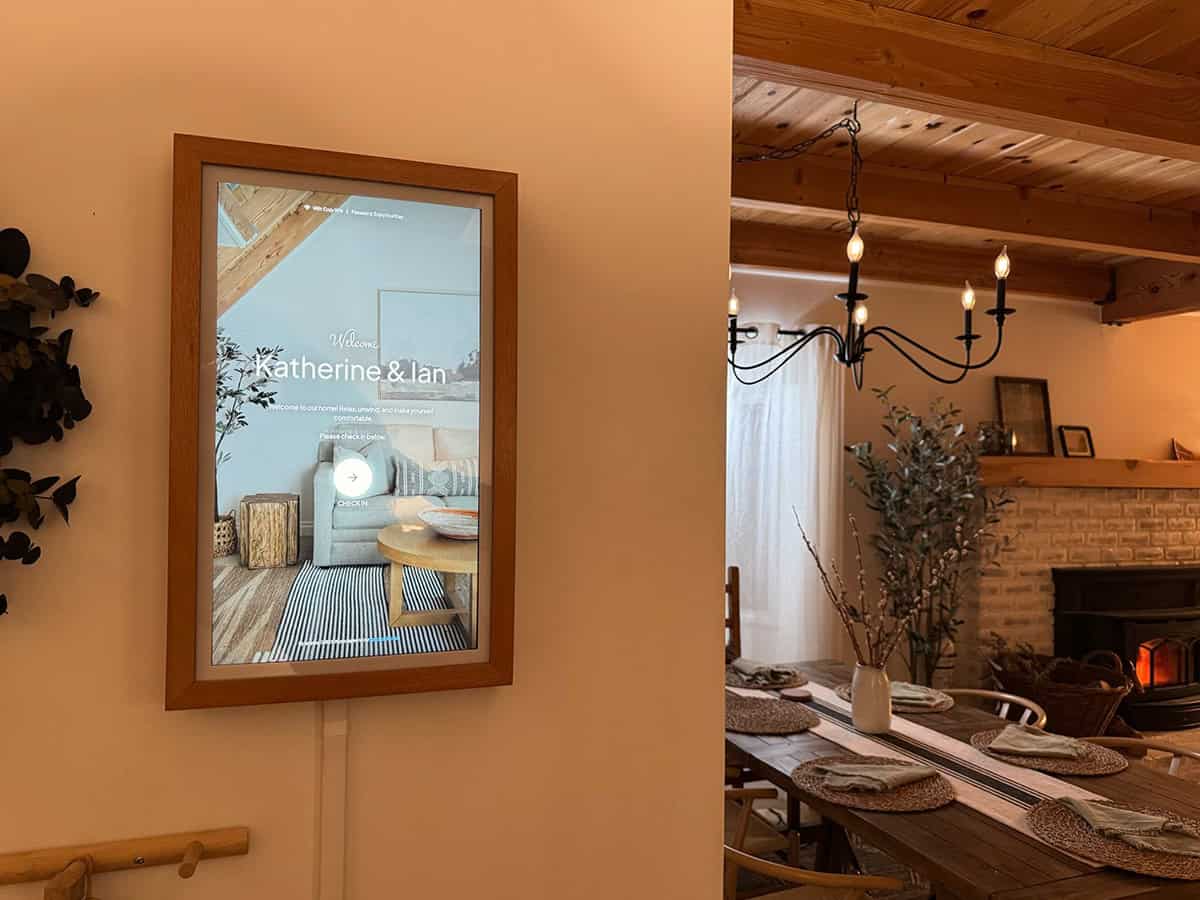
Wall-mounted digital guidebooks, like those offered by GuideScreen, provide a dedicated home base for property information in vacation rentals. This innovative solution addresses many of the practical limitations associated with app-based alternatives. By providing an always-visible, interactive display within the property, GuideScreen enhances guest experience without requiring constant device access.
Key Benefits of Wall-Mounted Digital Guidebooks
- Immediate Accessibility
Unlike apps that require pulling out a phone and navigating to a saved link, GuideScreen’s digital guidebook is always visible and ready to use. Guests can quickly find check-in instructions, house rules, and appliance information without searching through their devices.
- Ambient Information Presence
By providing a dedicated screen for rental information, GuideScreen creates a constant visual reference point in the property. Important details remain visible and top-of-mind throughout the guest’s stay, serving as a natural information hub rather than requiring active searching.
- Enhanced Communal Usability
A shared wall-mounted device encourages all guests—regardless of their tech-savviness—to engage equally with the guidebook. Visitors who may hesitate to bookmark links or navigate mobile interfaces benefit from a user-friendly touchscreen designed specifically for vacation rental needs.
- Consistent Presentation and Branding
Hosts can customize the GuideScreen interface to reflect their property’s style and personality. This consistent visual presence reinforces professionalism and creates a welcoming atmosphere that mobile links often lack due to generic layouts.
- No Reliance on Guest Device Compatibility or Battery Life
Since GuideScreen operates independently from guests’ phones or tablets, it avoids issues related to device compatibility, app updates, or depleted batteries that can hinder access to important information during a stay. The guidebook is always powered and ready.
- Real-Time Updates Without Guest Action
Hosts can remotely update content displayed on the wall-mounted device instantly, ensuring that guests always have access to the latest details about amenities, local events, or safety notices. Updates appear automatically without guests needing to refresh a page or reopen a link.
- Perfect for In-Property Information
GuideScreen excels as the central hub for everything related to the property itself: how appliances work, house rules, emergency procedures, Wi-Fi passwords, and checkout instructions. This allows app-based or web-based resources to focus on what they do best—providing portable recommendations for exploring the area.
GuideScreen’s solution keeps vital vacation rental information centralized and visible throughout the guest’s stay. The physical presence of a digital guidebook mounted within the property supports seamless communication between host and visitor while preserving convenience and engagement. This approach combines modern technology with intuitive ease of use in a way that complements short-term rental environments more naturally than relying solely on app-based options.
Comparing Popular App-Based Solutions Touch Stay and Hostfully with GuideScreen
App-based digital guidebooks like Touch Stay and Hostfully have gained traction among vacation rental hosts for their mobile-first approach and guest-friendly features. Both platforms emphasize convenience by allowing guests to access property information directly on their smartphones or through web browsers.
Understanding the strengths of these solutions alongside GuideScreen’s approach reveals how different tools serve different purposes in the vacation rental guest experience.
Strengths of Touch Stay and Hostfully
- Mobile Convenience: Guests can access the guidebook on-the-go, making it ideal for exploring the area with recommendations in hand.
- Personalization: Hosts can customize content with photos, house rules, local recommendations, and check-in instructions tailored to each property.
- Real-Time Updates: Changes made by hosts propagate instantly to all users, ensuring information accuracy without reprinting materials.
- Multimedia Integration: Videos, maps, and clickable links enrich the guest experience beyond static text.
- Offline Access: Both platforms offer offline modes so guests remain informed even when internet connectivity is weak or unavailable.
These features contribute to a streamlined experience that many travelers appreciate, particularly for discovering local restaurants, attractions, and activities outside the property.
Where App-Based Solutions Face Challenges
Despite their convenience for on-the-go use, several practical challenges emerge when apps or web-based guidebooks serve as the sole source of property information:
Device Dependency for In-Property Basics: Guests must repeatedly access their phones to find simple information like Wi-Fi passwords or how to use the coffee maker—details that benefit from constant visibility.
Shared Access Limitations: When multiple guests need to reference the same information simultaneously, a single mobile link creates bottlenecks that don’t exist with a shared display.
Lack of Ambient Presence: Unlike a physical guidebook or wall-mounted display, a web link doesn’t serve as a visible reminder of house rules or emergency contacts. Information must be actively sought rather than passively available.
Inconsistent Guest Adoption: Some guests may not bookmark the link, may lose it in their message history, or may prefer not to use their phones for basic property reference throughout their stay.
GuideScreen’s Always-On Display Format: A Complementary Approach
GuideScreen diverges from the mobile-only model by utilizing a wall-mounted digital display positioned within the rental property itself. This design choice addresses the in-property information needs that app-based solutions handle less effectively:
- The guidebook remains constantly visible without requiring guest interaction through personal devices.
- Serves as a natural information hub for property-specific details, reserving mobile solutions for on-the-go exploration.
- Encourages spontaneous browsing as part of the guest’s environment, making essential information immediately accessible to everyone in the group.
- Provides a dedicated interface optimized for quick reference and seamless navigation without the distraction of other notifications or apps.
Hosts benefit from a professional presentation that reinforces branding while guests enjoy immediate access to curated content tailored specifically for their stay—all without needing to pull out a phone.
Summary of Differences
| Feature | Touch Stay / Hostfully | GuideScreen |
| Access | Mobile link or web app on guest’s device | Wall-mounted in-property display |
| Best Use Case | On-the-go area exploration | In-property reference and home base |
| User Engagement | Requires active device access | Passive & intuitive browsing |
| Dependency | Guest’s smartphone & battery | Dedicated hardware provided |
| Interaction Style | Individual access via personal devices | Shared communal interface |
| Visibility | Must be actively opened | Always visible in common area |
This contrast illustrates that the choice isn’t necessarily between one solution or the other, but rather understanding which tool serves which purpose best. Many successful hosts use both: a wall-mounted display like GuideScreen for the “home manual” and in-property essentials, paired with a web-based guidebook for portable recommendations guests can reference while exploring the destination.
Making the Right Choice: App-Based vs. Wall-Mounted Digital Guidebooks for Your Vacation Rental
Choosing the right guidebook technology depends on understanding your guests’ needs and how they’ll interact with information during their stay. When it comes to selecting vacation rental guidebook technology, you need to balance innovation with intuitive usability. The goal is to enhance the guest experience, not create unnecessary complexity.
Assessing Guest Tech Savviness
Demographics Matter
Younger travelers often feel comfortable with app-based guidebooks due to their familiarity with smartphones and web apps. They appreciate interactive features, GPS tagging, and multimedia content that apps provide.
Tech-Hesitant Guests
Older guests or those less comfortable with mobile technology may find wall-mounted digital guidebooks more intuitive. A static, always-visible display reduces barriers to accessing information without requiring navigation through bookmarked links or saved messages.
Device Preference
Consider guests who might not want to rely on their phones for essential property information due to battery life concerns, preference for screen-free moments during downtime, or simply the convenience of not having to search for information on their device repeatedly.
Evaluating Guest Preferences
Convenience vs. Ambient Presence
App-based guidebooks offer portability and work perfectly for exploring the area. Wall-mounted displays provide constant visibility for in-property essentials without requiring guests to actively search their devices.
Information Accessibility
Web-based guidebooks allow real-time updates and can be accessed anywhere, which is ideal for dynamic content like restaurant recommendations or local event changes. Wall-mounted guides offer immediate visibility for frequently referenced property details without any interaction needed.
Interactivity
For providing rich local recommendations with maps and booking links, apps excel with interactive elements. For straightforward property guidance that all guests can easily reference, a wall-mounted solution provides instant, friction-free access.
Weighing Pros and Cons of App-Based Digital Guidebooks
| Pros | Cons |
| Real-time content updates | Requires guests to actively access their devices |
| GPS-enabled navigation for area exploration | Not ideal for frequently referenced in-property info |
| Multimedia integration with videos and tours | Lacks ambient visibility as a constant reference |
| Accessible anywhere guests travel | Shared access challenges for groups |
When Wall-Mounted Digital Guidebooks Shine
- Constant presence in a common area offers instant access to property essentials
- Eliminates need for bookmarking links or searching through messages
- Provides a natural information hub that all guests can reference simultaneously
- Tailored specifically for vacation rental environments with curated house rules, appliance instructions, and emergency contacts always visible
- Frees mobile devices to focus on what they do best: navigation, reservations, and on-the-go recommendations
Making the Decision
Reflect on your property type, guest profile, and what will truly enhance their stay:
If mobility and area exploration are priorities, web-based digital guidebooks like Touch Stay or Hostfully add tremendous value through personalization, interactive maps, and portable access to local recommendations.
If you want to create an intuitive home base for property information, wall-mounted options like GuideScreen provide a seamless way to communicate essential details without requiring guests to constantly reference their phones.
Hybrid Approach: Many successful hosts combine both—offering a wall-mounted display for the “home manual” (house rules, appliance guides, emergency contacts, checkout procedures) alongside a web-based guidebook link for portable recommendations guests can access while exploring the city, finding restaurants, or navigating to local attractions.
Understanding your audience’s needs drives effective implementation in choosing vacation rental guidebook technology. Thoughtful selection ensures your guidebook becomes a helpful companion rather than a digital hurdle during their stay. The best solution recognizes that different types of information serve different purposes—and the right tools can work together to create an exceptional guest experience.