
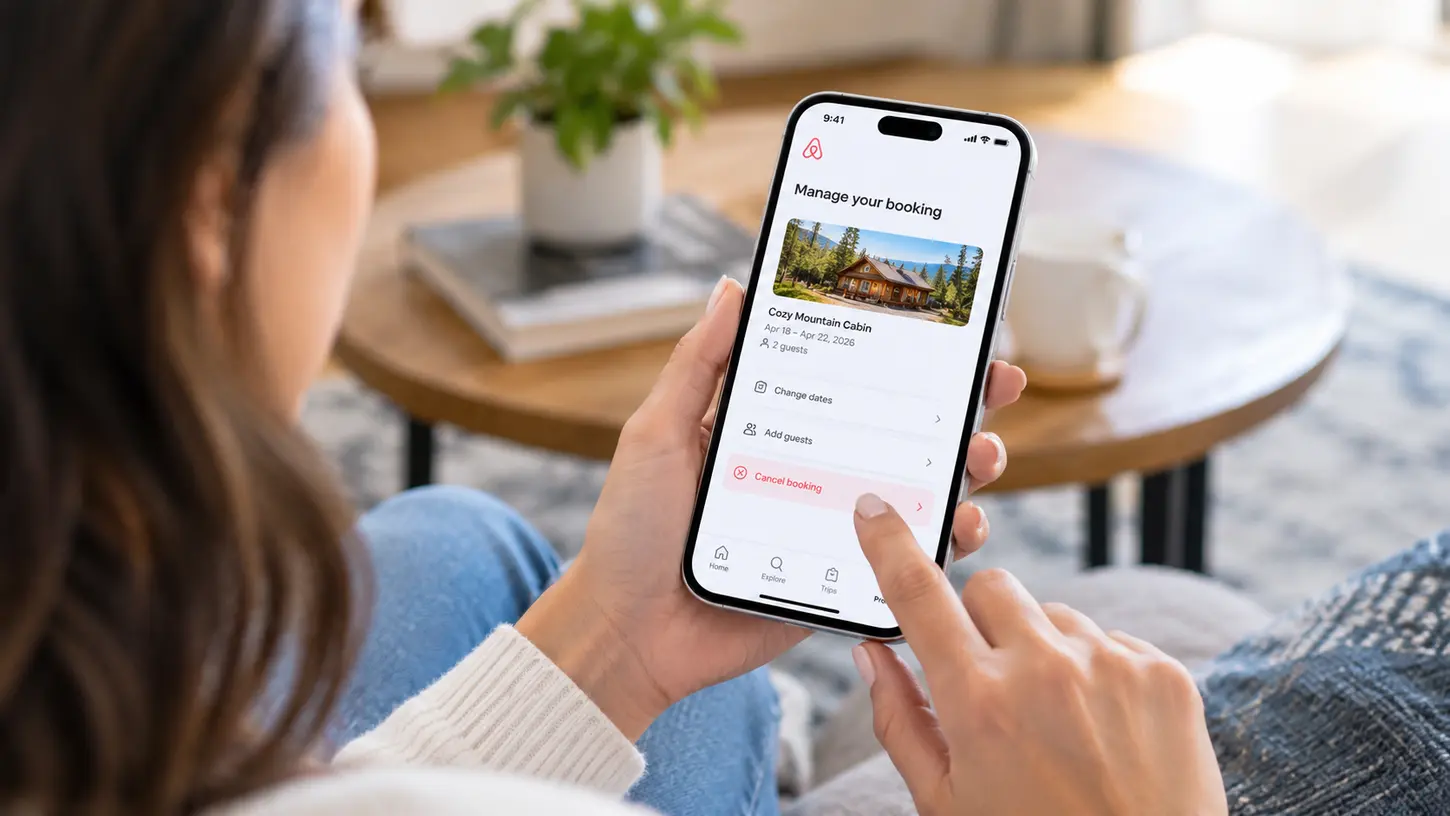
Last reviewed: October 2026. Airbnb restructured its standard cancellation policies on October 1, 2025, and has added new options since. If you’re working from a guide written before that date, some of its information may no longer reflect how Airbnb’s cancellation policies currently work.
Cancellation policies are one of the most consequential settings an Airbnb host configures on a listing. Get the balance right, and your policy quietly protects your revenue in the background of every reservation. Get it wrong, and a single guest canceling during peak season can cost you a significant share of your monthly income.
Every Airbnb cancellation policy involves the same balancing act. Guests want the freedom to change their plans, while hosts need confidence that a confirmed booking will translate into actual income. The policy attached to each reservation determines:
- Whether the guest receives a full or partial refund if they cancel
- How much the host is paid when a cancellation happens
- How much advance notice a guest must give before a booking stops being fully refundable
Airbnb overhauled its cancellation policy structure in October 2025. It introduced a new Limited policy, removed Strict from the standard options most hosts can choose, and added a universal 24-hour free cancellation window to every standard short-stay policy. Since then, Airbnb has also added date-specific policies and a paid extended cancellation option for guests. If you haven’t reviewed your listing settings recently, your current policy may not offer the protection you originally intended.
This guide covers everything hosts need to know: the four standard short-stay policies, the long-term options for monthly stays, non-refundable rates, host cancellations, and practical strategies for choosing the right Airbnb cancellation policy for hosts in your market.
What Are Airbnb Cancellation Policies?
Airbnb cancellation policies are the terms that govern what happens to a reservation when a guest decides not to proceed with their stay. Each host selects a cancellation policy for their listing: one for short-term stays and one for long-term stays. Those terms establish the financial consequences of a cancellation for both the guest and the host.
Cancellations generally fall into three categories:
- Guest-initiated cancellations: The guest chooses to cancel, and the listing’s cancellation policy determines the refund and the host payout.
- Host-initiated cancellations: The host cancels a confirmed booking, which falls under Airbnb’s separate host cancellation rules and can carry fees and other consequences.
- Cancellations covered by special circumstances: Qualifying situations under Airbnb’s Major Disruptive Events Policy or its Rebooking and Refund Policy can override the standard cancellation terms.
Cancellation terms are displayed on the listing page and during checkout, so guests see them before they confirm a reservation. Once a booking is confirmed, the policy attached to that reservation generally determines the guest’s refund and the host’s payout, even if the host changes their listing settings afterward.
Airbnb Cancellation Policy Changes in 2026: What Hosts Need to Know
The current system is built on the changes Airbnb introduced on October 1, 2025, along with several newer additions. Many older articles still describe the previous structure, so it’s worth understanding exactly what changed.
The Introduction of the Limited Cancellation Policy
The most significant structural change was the introduction of Limited as a standard cancellation option, available for reservations booked on or after October 1, 2025. Limited gives guests a 14-day full-refund window, which is more restrictive than Moderate’s five-day deadline but more generous than Firm’s 30-day cutoff.
For hosts who found Moderate too permissive but worried that Firm discouraged bookings, Limited fills a genuine gap in the lineup.
Changes to the Former Strict Cancellation Policy
Before October 2025, Strict was one of the standard short-stay options many hosts relied on. It is no longer one of the standard options. Listings that used Strict were moved to Firm unless an eligible host opted to keep it before the change took effect, and Strict is now available only to certain hosts by invitation from Airbnb.
For most hosts, this makes Firm the strictest standard short-stay policy. Be careful not to confuse it with the separate long-term Strict policy, which still applies to monthly stays of 28 nights or more. Guides that describe short-stay Strict as a standard option are describing the pre-October 2025 structure.
The 24-Hour Free Cancellation Window
Every standard cancellation policy for stays shorter than 28 nights now includes a 24-hour cancellation period. Guests can cancel for a full refund, including taxes, as long as:
- They cancel within 24 hours of the reservation being confirmed
- The reservation was confirmed at least seven days before check-in (based on the listing’s local time)
This rule matters even if you’ve chosen a restrictive policy. A guest who books your Firm-policy listing three weeks out can still cancel for a full refund the next morning. Hosts can’t remove this window, so it’s worth factoring into how you think about newly confirmed reservations.
Date-Specific Cancellation Policies
Airbnb now allows hosts to set different short-term stay cancellation policies for specific date ranges directly from their calendar. You might keep a Flexible policy during quieter months to attract more bookings, then apply Firm to peak summer weeks, holiday weekends, or major local events, when a cancellation is harder to replace.
These date-specific policies are optional. If you don’t set any, your main listing policy stays in effect. When you do use them, the policy that applies to a reservation depends on its check-in date. If a stay spans dates with two different policies, the policy attached to the check-in date applies.
The Extended Cancellation Option for Guests
In 2026, Airbnb began offering an extended cancellation option in selected countries, including the US. Where it’s available, eligible guests can pay Airbnb an additional fee at checkout for the ability to cancel for a full refund up to 24 hours before check-in, regardless of the host’s policy.
For hosts, the key point is that you’re still paid according to your own cancellation policy if a guest with this option cancels. Most listings using Moderate, Limited, Firm, or Strict are automatically eligible, and the booking details show when a guest has purchased the option. Hosts who don’t want to offer it can opt out at any time. Even though your payout is protected, it can mean more short-notice openings on your calendar to fill.
Airbnb’s Standard Cancellation Policies for Short-Term Stays
Standard cancellation policies apply to reservations of 27 consecutive nights or fewer. Most hosts can choose from four options, all of which include the 24-hour free cancellation window described above.
Airbnb cancellation policies 2026 at a glance
| Policy | Full Refund Deadline | Host Payout After the Deadline | Best Suited For |
|---|---|---|---|
| Flexible | Up to 24 hours before check-in | Nights stayed plus one additional night | Hosts prioritizing booking conversions |
| Moderate | Up to 5 days before check-in | One additional night plus 50% of unspent nights | Hosts balancing flexibility and protection |
| Limited | Up to 14 days before check-in | 50% of all nights between 7 and 14 days; 100% inside 7 days | Hosts wanting more cancellation protection |
| Firm | Up to 30 days before check-in | 50% of all nights between 7 and 30 days; 100% inside 7 days | Hosts protecting advance bookings |
The table summarizes the standard rules. The exact payout calculations for each policy are explained in the sections below.
Airbnb Flexible Cancellation Policy
Under the Airbnb Flexible cancellation policy, guests can cancel up to 24 hours before check-in for a full refund, including taxes, and the host isn’t paid.
If a guest cancels after that point, the host is paid for each night the guest stays plus one additional night. In practice, a guest who cancels within 24 hours of check-in and never arrives costs the host every night except the first.
Advantages:
- More appealing to travelers who want flexibility when they book
- Can help attract last-minute bookings
- May encourage reservations from guests whose travel plans aren’t yet certain
Disadvantages:
- Greater exposure to cancellations at almost any point before arrival
- Very little protection against late cancellations
- Canceled peak-period dates can be difficult to rebook at short notice
Flexible tends to work best in markets with steady demand and short booking lead times, where canceled dates are likely to be filled again quickly.
Airbnb Moderate Cancellation Policy
Under the Airbnb Moderate cancellation policy, guests can cancel up to five days before check-in for a full refund, including taxes, and the host isn’t paid.
If a guest cancels after that deadline but before check-in, the host is paid for one night plus 50% of all remaining unspent nights. If the guest cancels after checking in, the host is paid for each night stayed, plus one additional night, plus 50% of the unspent nights.
Advantages:
- Offers a reasonable amount of flexibility for guests
- Provides more protection than Flexible
- Appeals to travelers who want some cancellation flexibility without a fully refundable stay
Disadvantages:
- Hosts can still lose meaningful revenue from late cancellations
- Five days may not be enough time to replace a reservation, especially in slower markets
Airbnb Limited Cancellation Policy
Under the Airbnb Limited cancellation policy, guests can cancel up to 14 days before check-in for a full refund, including taxes, and the host isn’t paid.
- Between 7 and 14 days before check-in (after the 24-hour window): the guest receives a 50% refund, and the host is paid 50% for all nights
- Less than 7 days before check-in: the host is paid 100% for all nights
- After check-in: the guest receives no refund, and the host is paid 100% for all nights
Advantages:
- Requires two weeks’ notice before a cancellation becomes fully refundable
- Offers better revenue protection than Flexible and Moderate
- Strikes a practical compromise between guest flexibility and host protection
Disadvantages:
- Some guests may prefer listings with more generous cancellation terms
- Hosts need to weigh booking appeal against revenue protection
Limited is a practical choice for hosts who felt underprotected by Moderate but found that Firm was deterring guests.
Airbnb Firm Cancellation Policy
Firm is the strictest standard option for short-term stays for most hosts. Under the Airbnb Firm cancellation policy, guests can cancel up to 30 days before check-in for a full refund, including taxes, and the host isn’t paid.
- Between 7 and 30 days before check-in (after the 24-hour window): the guest receives a 50% refund, and the host is paid 50% for all nights
- Less than 7 days before check-in: the host is paid 100% for all nights
- After check-in: the guest receives no refund, and the host is paid 100% for all nights
Advantages:
- Greater protection against cancellations
- More predictable revenue from advance reservations
- Well suited to properties with strong, consistent demand
Disadvantages:
- Less flexibility for guests
- May discourage travelers whose plans could change
- Can make a listing less competitive against comparable properties with more flexible terms
What Each Policy Means in Dollars: A Payout Example
Seeing the policies side by side in financial terms makes the differences much easier to understand.
Take a four-night reservation at $300 per night, for a $1,200 accommodation total. The guest booked well in advance, so the 24-hour free cancellation window has already passed. Here’s what the host would be paid if the guest cancels at three different points:
| Policy | Cancels 20 Days Before Check-In | Cancels 10 Days Before Check-In | Cancels 3 Days Before Check-In |
|---|---|---|---|
| Flexible | $0 | $0 | $0 |
| Moderate | $0 | $0 | $750 (first night plus 50% of the remaining three nights) |
| Limited | $0 | $600 (50% of all nights) | $1,200 (100% of all nights) |
| Firm | $600 (50% of all nights) | $600 (50% of all nights) | $1,200 (100% of all nights) |
At 10 days out, the difference between Moderate and Limited is $600 from a single cancellation. At 20 days out, Firm is the only standard policy that pays anything at all.
These figures are simplified to show how each policy works. They reflect the accommodation total before Airbnb’s host service fee and don’t include taxes or Airbnb’s guest fees. Your actual payout will appear in the reservation’s payout breakdown. Airbnb’s guide to choosing the right cancellation policy is worth reviewing alongside numbers like these.
Airbnb Long-Term Cancellation Policies (28 Nights or More)
Reservations of 28 consecutive nights or longer are considered monthly stays, and they follow a separate Airbnb long-term cancellation policy rather than the standard short-stay options. Airbnb long-term cancellation policies give hosts two choices: Firm and Strict.
Airbnb Firm Long-Term Cancellation Policy
- Guests must cancel at least 30 days before check-in to receive a full refund, including taxes
- If they cancel after that deadline, the host is paid 100% for all nights already spent plus 30 additional nights
- If fewer than 30 nights remain when the guest cancels, the host is paid 100% for all of those remaining nights
- If the guest cancels after check-in, the guest receives no refund, and the host is paid 100% for all nights
This structure protects hosts who commit a large block of their calendar to a single guest. A late cancellation still leaves the host with up to a month of compensation, giving them time to find a new booking.
Airbnb Strict Long-Term Cancellation Policy
- To receive a full refund, including taxes, guests must cancel within 48 hours of booking, and the cancellation must take place at least 28 days before check-in
- If they cancel after that, the host is paid 100% for nights already spent plus the next 30 nights of the reservation
- If fewer than 30 nights remain, the host is paid 100% for all remaining nights
- If the guest cancels after check-in, the guest receives no refund, and the host is paid 100% for all nights
The key difference is the size of the full-refund window. Long-term Firm gives guests until 30 days before check-in to cancel for free. Long-term Strict closes that window just 48 hours after booking. For a guest who books two months ahead, that’s the difference between several weeks of free cancellation and two days.
What Happens When a Guest Cancels During a Monthly Stay?
Under Airbnb’s current long-term policy terms, a guest who cancels after checking in receives no refund, and the host is paid 100% for all nights under both long-term Firm and long-term Strict. A guest who cancels before check-in but after the full-refund deadline triggers the 30-night rule instead.
Monthly guests sometimes ask to shorten a stay or change their dates rather than cancel outright. Before agreeing to a change, review the cancellation terms shown on that specific reservation, since the policy in effect when the booking was made is the one that applies. Make any changes through Airbnb’s official alteration process so your payout is calculated correctly.
Airbnb’s Non-Refundable Booking Option Explained
Alongside your standard cancellation policy, you can choose to offer the Airbnb non-refundable option on stays shorter than 28 nights. Guests then choose between your standard rate, which follows your cancellation policy, and a discounted rate that doesn’t. Full details on offering a non-refundable option are available in Airbnb’s Help Center.
How Does the Non-Refundable Option Work?
- You set the discount, which is typically 10% off the base price
- Your discounted rate appears in search, giving price-conscious guests a reason to click
- At checkout, guests choose between your standard rate and the discounted, non-refundable rate
- If a guest cancels after any applicable free cancellation period, you keep your entire payout for all nights booked
- Eligibility is limited: the reservation’s checkout date must fall within 60 days, and the discount doesn’t apply to bookings made through a pre-approval or special offer
There’s also a booking cutoff that depends on your standard policy. Guests can book the non-refundable rate up to 1 day before check-in under Flexible, up to 5 days before under Moderate, and up to 14 days before under Limited and Firm.
Can Guests Cancel a Non-Refundable Airbnb Reservation?
Yes, in limited situations. Non-refundable bookings are still subject to the 24-hour cancellation period that applies to all standard short-stay bookings, so a guest who books at least seven days ahead can cancel within 24 hours for a full refund.
After that, guests may still receive a refund if their reservation is affected by a qualifying Major Disruptive Event. A non-refundable rate significantly narrows a guest’s refund options, but it doesn’t remove every possible exception.
Benefits of Offering Non-Refundable Bookings
- Savings for guests: Travelers with firm plans get a lower price.
- Extra protection for hosts: Late cancellations on these bookings don’t cost you your payout.
- Commitment from the right guests: The discount attracts travelers who are confident about their dates.
- Pricing flexibility: It adds a second rate without changing your standard cancellation policy.
When Should Airbnb Hosts Offer Non-Refundable Rates?
Because the option only applies to reservations with a checkout date within the next 60 days, it works best as a near-term booking tool:
- During periods of high demand, when guests are likely to commit anyway
- For popular holiday dates and local events coming up in the next two months
- When your property books consistently, so a modest discount is a manageable trade-off
- When you want to attract price-conscious travelers who are confident about their plans
- When the discount costs less than a likely cancellation would, especially on higher-value stays
How Airbnb Cancellation Policies Affect Host Payouts
Policy terms are easier to apply when you know exactly what they mean for the money that reaches your account.
How Much Do Airbnb Hosts Get Paid When Guests Cancel?
Your payout depends on two things: the cancellation policy attached to the reservation and when the guest cancels.
- Full-refund cancellations: If the guest cancels within the 24-hour window or before your policy’s full-refund deadline, you aren’t paid.
- Partial cancellations: After the deadline, you receive a portion of the booking, such as 50% of all nights under Limited and Firm, or one night plus 50% of unspent nights under Moderate.
- Non-refundable bookings: After the free cancellation period, you keep your entire payout for all nights booked.
Airbnb calculates compensation for unused nights as a share of the nightly rate you set. Your payout is also net of Airbnb’s host service fee, so it won’t match the reservation total the guest paid.
Are Airbnb Cleaning Fees Refunded When Guests Cancel?
Under Airbnb’s current rules, the cleaning fee is fully refunded if a guest cancels during the free cancellation period. If they cancel after that, the cleaning fee is treated as part of the nightly price, and any refund follows your cancellation policy.
This is a relatively recent change. For reservations booked before April 21, 2025, cleaning fees were fully refunded whenever a guest canceled before check-in, regardless of the cancellation policy.
What Happens to Airbnb Service Fees and Taxes?
A “full refund” under Airbnb’s cancellation policies includes taxes. For partial refunds, taxes are usually still refunded in full. Under Limited and Firm, for example, a guest who cancels inside the 50% window (7 to 14 days out under Limited, or 7 to 30 days out under Firm) receives 50% of the booking plus a full refund of taxes. Under Flexible, a guest who cancels late receives a pro-rated tax refund.
Airbnb’s guest service fee is generally refunded if the guest cancels during the free cancellation period or if the host chooses to refund the reservation in full. Because fees and taxes are handled separately, check Airbnb’s payout breakdown for each canceled reservation rather than assuming the guest’s refund equals your lost revenue.
What Happens If a Guest Cancels After Checking In?
Mid-stay departures are treated very differently depending on the policy:
- Flexible: The host is paid for each night stayed, plus one additional night.
- Moderate: The host is paid for each night stayed, plus one additional night, plus 50% of the unspent nights.
- Limited and Firm: The guest receives no refund, and the host is paid 100% for all nights.
For longer short-term stays, that difference can be substantial. A guest leaving three nights into a seven-night Flexible booking costs the host three nights of income, while the same departure under Firm costs nothing.
Airbnb’s Special Circumstances and Cancellation Exceptions
Your listing’s cancellation policy governs most outcomes, but not all of them. Airbnb can override it in certain situations. If you’ve already been paid for a reservation that is later refunded under one of these policies, Airbnb may recover the amount by deducting it from your next payout.
Airbnb’s Major Disruptive Events Policy
The Major Disruptive Events Policy, which replaced the former Extenuating Circumstances Policy, applies in the rare cases where large-scale events prevent or legally prohibit a reservation from being completed. To qualify, the event must affect the reservation location and occur after the booking was made.
Covered events include:
- Declared public health emergencies and epidemics
- Government travel restrictions, such as mandatory evacuation or shelter-in-place orders
- Military actions and other hostilities
- Large-scale outages of essential utilities affecting most homes in an area
- Unforeseeable natural disasters and severe weather events, such as earthquakes and tsunamis
When a large-scale event occurs, Airbnb assesses the situation and activates the policy for the affected area and time period. Guests with covered reservations can then cancel and receive a refund, travel credit, or other consideration, regardless of the listing’s policy.
Plenty of disruptive situations don’t qualify. Events that affect the guest but not the property location, personal illness or injury, flight cancellations, non-binding travel advisories, and weather that’s common enough to be foreseeable, such as hurricanes in Florida during hurricane season, generally remain subject to your standard cancellation policy. Any refund you offer outside your policy in those situations is at your discretion.
Airbnb’s Rebooking and Refund Policy for Homes
Separately, guests may qualify for a full or partial refund if they encounter a serious problem with the accommodation that the host can’t resolve quickly. Examples include:
- Listing inaccuracies: The property is significantly different from its listing description.
- Cleanliness or safety issues: The accommodation has serious hygiene problems or safety hazards.
- Missing essential amenities: An advertised essential amenity isn’t available.
- Access problems: The guest can’t get into the property as agreed.
Accurate listings and prompt communication are the best defenses here. Many of these claims start with a gap between what a guest expected and what they found, or with an issue that went unresolved because the guest couldn’t reach the host quickly.
Regional and Local Cancellation Policy Differences
Airbnb applies different rules in some locations to comply with local laws:
- California: Guests can cancel any reservation for a stay in California within 24 hours of confirmation for a full refund, regardless of the listing’s policy, as long as the booking was confirmed at least 72 hours before check-in. That’s a shorter lead-time requirement than the standard seven days.
- Germany: Hosts are responsible for making sure their selected cancellation policy complies with local requirements.
- South Korea: Different cancellation terms apply to South Korean guests staying at listings with Strict cancellation policies.
Airbnb also asks all hosts to make sure their chosen policy complies with local rules and regulations, so check the requirements that apply to your property’s location.
Airbnb Host Cancellation Policy: What Happens When Hosts Cancel?
Host cancellations are treated very differently from guest cancellations, and the consequences are significant. The Airbnb host cancellation policy makes clear that the platform discourages hosts from canceling except where necessary.
Does Airbnb Charge Hosts for Canceling Reservations?
Any time a host cancels a confirmed booking, they don’t receive a payout for that reservation. They may also be charged a cancellation fee. Airbnb cancellation fees for hosts and other penalties depend on the circumstances, including whether the cancellation qualifies for a waiver.
Other Consequences of Host Cancellations
- Blocked calendar: The dates of the canceled reservation are blocked, so you can’t rebook them.
- Superhost status: Cancellations can cost you Superhost status.
- Listing or account suspension: Airbnb may suspend or remove a listing or account.
- Other adverse consequences: Additional penalties may apply depending on the circumstances.
When Can Airbnb Waive Host Cancellation Penalties?
Airbnb may waive cancellation fees and other consequences when a host cancels for a valid reason outside their control. Examples include:
- Emergency repairs to the home
- A serious illness that prevents the host from hosting
- Evidence that a guest intends to break a house rule
- A qualifying Major Disruptive Event affecting the reservation location
Even when a cancellation is covered by the Major Disruptive Events Policy, the calendar is still blocked for those dates, and the host isn’t paid for the reservation. If you think your situation qualifies for a waiver, contact Airbnb before you cancel and be ready to provide proof of the reason.
Can Hosts Ask Guests to Cancel Instead?
Hosts should never ask or encourage a guest to cancel on their behalf to avoid host cancellation penalties. Airbnb’s rules state that a host who can’t honor a reservation must cancel it promptly and may not encourage the guest to cancel, and doing so can still lead to consequences for the host. It’s also unfair to the guest, who could lose money under your cancellation policy rather than receiving the full refund they’d get from a host cancellation. If you genuinely can’t host a reservation, cancel through Airbnb’s official process and request a waiver if you believe one applies.
How to Choose the Best Airbnb Cancellation Policy for Your Property
The strictest policy isn’t automatically the most profitable. A policy that protects every booking won’t help much if it means fewer guests book your property in the first place.
Consider Your Property’s Location and Demand
- High-demand destinations can often support stricter policies, because guests are motivated to book regardless.
- Competitive markets with many similar listings may reward more flexible terms, which can tip a guest’s decision your way.
- Seasonal destinations may need different approaches at different times of year, depending on booking patterns.
Consider Your Typical Booking Lead Time
If guests usually book months ahead, a stricter policy offers real protection, because an early cancellation can leave a long gap that’s hard to fill. If most of your bookings come in at the last minute, guests are committing close to check-in anyway, so strict terms matter less.
The practical question is how long it would realistically take to replace a canceled booking. Properties that fill open dates within a few days can afford flexibility. Properties that need weeks to find a replacement benefit more from Limited or Firm.
Consider Seasonal Demand and Peak Travel Periods
Holidays, school breaks, summer vacations, and major local events all raise the cost of a cancellation, since demand is high and those dates are your most valuable. Date-specific cancellation policies let you apply Firm or Limited to those periods while keeping a more flexible policy for the rest of the year, so you’re protected where it matters most without limiting bookings in slower months.
Understand Your Ideal Guest
- Business travelers: Often value flexibility because their schedules can change at short notice.
- Families: Tend to plan further ahead and appreciate the security of a refundable booking.
- Couples and leisure travelers: May prioritize either price or flexibility, depending on how settled their plans are.
- Longer-stay guests: Fall under the long-term policies, so they need separate consideration.
Balance Booking Conversions and Revenue Protection
A restrictive policy can lower your conversion rate, because guests comparing similar properties may choose the one with more forgiving terms. In an Airbnb survey of travelers, 44% of guests said free cancellation is one of their top needs when choosing a place to stay, and listings with free cancellation periods longer than 48 hours after booking are highlighted in search results.
An overly flexible policy has its own costs, leaving key dates exposed with little time to recover. Rather than relying on assumptions, review your actual occupancy, cancellation rate, and how quickly canceled dates get rebooked. Those numbers will tell you whether tightening or loosening your policy is likely to pay off.
How to Change Your Airbnb Cancellation Policy
If your current policy no longer fits, updating it only takes a few clicks. Airbnb’s Help Center also explains changing your Airbnb cancellation policy on desktop, mobile apps, and mobile browsers.
Changing Your Cancellation Policy on Desktop
- Log in to your Airbnb host account
- Click Listings and select the listing you want to edit
- Under Listing editor, click Your space
- Click Cancellation policy
- Next to your policy, click Edit
- Make your selection and click Save
Can You Change the Cancellation Policy for Existing Reservations?
No. Changes to your cancellation policy only apply to future reservations. Pending and confirmed reservations keep the policy that was in place when you received them. Before you change your settings, review your upcoming bookings so you know which ones remain under your current terms.
Can You Set Different Cancellation Policies for Different Dates?
Yes. You can assign different short-term stay cancellation policies to specific date ranges directly from your calendar. A few examples:
- Holiday weekends: Apply Firm to Thanksgiving or Fourth of July dates that book up early.
- Peak seasons: Use Limited or Firm across your busiest summer or ski-season weeks.
- Slower periods: Switch to Flexible or Moderate during shoulder seasons to encourage bookings.
Any dates without a specific policy will continue to use your main listing policy.
Practical Tips for Managing Airbnb Cancellations
Choosing the right policy is only part of managing cancellations well. These habits help regardless of which policy you choose.
Keep Your Listing Information Accurate
Make sure your property description, amenity list, photos, and house rules reflect what guests will actually find. A listing that’s significantly different from reality can qualify a guest for a refund outside your cancellation policy under Airbnb’s Rebooking and Refund Policy, and that’s an entirely preventable risk. Keep important property information easy to find both before arrival and during the stay.
Communicate Clearly With Guests Before Check-In
- Confirmation messages: Send a welcome message soon after booking with the key details guests need.
- Check-in instructions: Make them simple, clear, and easy to follow, especially for self check-in.
- Expectations: Set clear expectations about property access, amenities, and house rules before guests arrive.
Have a Plan for Last-Minute Cancellations
- Monitor booking activity and keep a close eye on upcoming availability.
- Keep your calendar updated, especially if you list across multiple platforms.
- Adjust pricing when canceled dates open up at short notice.
- Respond quickly to new inquiries so reopened dates don’t sit empty.
Make Important Property Information Easy to Access
Once guests arrive, they need quick access to the details that make a stay run smoothly: check-in steps, house rules, Wi-Fi details, appliance instructions, and checkout tasks. When that information is scattered across emails and messages, guests end up contacting you for answers or missing details entirely, and small frustrations can show up later in reviews.
A digital in-property guest guide gives guests one reliable place to find answers on their own. A digital concierge for vacation rentals like GuideScreen takes this a step further by displaying your welcome message, property information, house rules, and how-to videos on a screen mounted inside the property. It won’t change Airbnb’s refund rules or stop a guest from canceling, but it helps make sure the guests who do arrive have everything they need from the moment they walk in. More vacation rental hosting tips on guest communication can help you round out your approach.
Frequently Asked Questions About Airbnb Cancellation Policies
What Is the Strictest Airbnb Cancellation Policy in 2026?
For most hosts, Firm is the strictest standard cancellation policy for short-term stays. Guests must cancel at least 30 days before check-in for a full refund. The short-stay Strict policy is no longer a standard option and is only available to certain hosts by invitation, while a separate Strict policy remains available for long-term reservations of 28 nights or more.
What Is the Most Flexible Airbnb Cancellation Policy?
Flexible is the most accommodating standard policy. Guests can cancel up to 24 hours before check-in for a full refund.
Does Airbnb Give Guests 24 Hours to Cancel for Free?
Yes, for standard short-stay bookings. Guests can cancel within 24 hours of the reservation being confirmed for a full refund, as long as the booking was confirmed at least seven days before check-in. In California, the requirement is 72 hours before check-in.
Can Airbnb Hosts Choose Their Own Cancellation Policies?
Yes. Most hosts choose one standard policy for short-term stays, either Flexible, Moderate, Limited, or Firm, and one long-term policy, either Firm or Strict, for stays of 28 nights or more. Hosts can also set different short-term policies for specific date ranges.
Can Airbnb Hosts Change Their Cancellation Policy After a Booking?
Hosts can change their listing’s policy at any time, but the change only applies to future reservations. Existing pending and confirmed bookings keep the policy that applied when they were received.
Do Airbnb Guests Get a Refund If They Cancel Within 24 Hours?
It depends on which 24 hours. Guests who cancel within 24 hours after booking get a full refund on standard short-stay reservations confirmed at least seven days before check-in. Separately, the Flexible policy lets guests cancel for a full refund up to 24 hours before check-in. A guest who cancels within 24 hours of check-in generally won’t receive a full refund under any standard policy.
Does Airbnb Refund Cleaning Fees When Guests Cancel?
Cleaning fees are fully refunded if the guest cancels during the free cancellation period. After that, the cleaning fee is treated as part of the nightly price and refunded according to the host’s cancellation policy. Reservations booked before April 21, 2025, follow the older rule, under which cleaning fees were refunded in full for any cancellation before check-in.
Can Airbnb Hosts Refuse to Refund a Guest?
Hosts aren’t required to refund more than their cancellation policy allows. However, Airbnb can override the policy when a reservation is covered by its Major Disruptive Events Policy or its Rebooking and Refund Policy, and local laws such as California’s 24-hour rule can also apply.
What Happens If an Airbnb Host Cancels a Reservation?
The host doesn’t receive a payout for the reservation and may face cancellation fees, a blocked calendar for those dates, loss of Superhost status, and listing or account suspension. Airbnb may waive fees and other consequences for valid reasons outside the host’s control.
Can Airbnb Guests Cancel Non-Refundable Reservations?
Guests can cancel within the 24-hour free cancellation period for a full refund, as long as they booked at least seven days before check-in. After that, they generally won’t receive a refund, unless the reservation is affected by a qualifying Major Disruptive Event.
Does Airbnb Have a Different Cancellation Policy for Monthly Stays?
Yes. Reservations of 28 consecutive nights or more follow Airbnb’s separate long-term cancellation policies, Firm and Strict, which use different refund deadlines and a 30-night payout rule.
Beyond the Cancellation Policy: Setting Guests Up for a Smooth Stay
Your cancellation policy decides what happens financially when plans change. Everything that happens once a guest actually arrives is up to you, and that’s where your reviews and repeat bookings are won or lost.
Guests who can find house rules without searching their inbox, connect to Wi-Fi without messaging you, and figure out the coffee machine on their own tend to settle in faster and leave happier. When information is hard to find, the opposite happens: more late-night messages, more small frustrations, and more chances for a minor issue to turn into a complaint.
A digital guest guide for vacation rentals keeps that information in plain sight. GuideScreen is a 21.5″ wall-mounted digital concierge that greets guests by name with a personalized welcome message synced from your booking calendar. It displays your check-in steps, house rules, Wi-Fi QR code, appliance how-to videos, local recommendations, and checkout checklist, and you can update everything remotely across all your properties from one dashboard.
It won’t change Airbnb’s cancellation rules, and it doesn’t need to. Your cancellation policy protects your revenue when plans change. A well-informed guest is how you protect everything else.
This article reflects Airbnb’s cancellation policies as of October 2026, including the changes that took effect on October 1, 2025. Airbnb updates its policies periodically and sometimes tests new options, so review Airbnb’s Help Center and your listing settings for the terms that currently apply to your property.